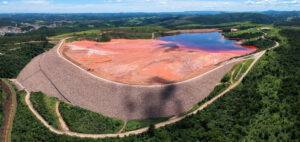
A tailings dam (part of a broader tailings storage facility, or TSF) is an engineered embankment used to store tailings, the finely ground rock, process water, and residual constituents left after extracting minerals such as gold, copper, and iron from ore. Because tailings remain on site for decades, safe containment and ongoing performance monitoring are essential.
Monitoring helps operators, the Engineer of Record (EoR), and site geotechnical teams identify changing conditions (for example, deformation, pore-water pressure, seepage, or unusual vibration) early, so they can investigate, manage risk, and protect people, the environment, and operations. Even small trends can matter in an embankment, which is why consistent data, clear trigger levels, and timely escalation are a key part of modern tailings management.
Sintela supports early detection through continuous monitoring solutions that help the EoR, TSF managers, and operations leadership assess tailings facilities with near real-time insight, enabling faster response when conditions change.
What is Tailings Dam Monitoring?
Tailings dam monitoring is the ongoing measurement and interpretation of conditions that influence tailings storage facility (TSF) performance. A typical risk-based monitoring program combines visual inspections, geodetic survey, remote sensing (including InSAR where applicable), and in-situ geotechnical instrumentation (for example, piezometers, inclinometers, settlement plates, and seepage monitoring) to track parameters such as internal erosion, deformation, pore-water pressure, seepage, temperature, and vibration, and to trigger investigation through defined thresholds and trigger action response plans (TARPs).
Active TSFs vs. Legacy Facilities
Monitoring needs vary across the TSF life cycle. An active or operating TSF often requires higher-frequency surveillance to support deposition management, staged raises, and day-to-day water balance decisions. In contrast, a legacy (Inactive/Closed) TSF (also called inactive or closed TSF) shifts the focus to closure and post-closure performance, long-term stability, seepage behaviour, and verification that the facility continues to perform as intended. In both cases, remote monitoring and clear trigger levels can support long-term stewardship while reducing unnecessary site visits.
Most sites use a mix of methods, such as visual inspections, survey/remote sensing, and in-situ instrumentation. However, approaches that are infrequent or point-based can miss developing trends between readings. Adding continuous or higher-frequency monitoring (where appropriate) can reduce blind spots and support earlier investigation and intervention.
Why Tailings Dam Monitoring is Critical in Modern Mining
Tailings facilities can contain large volumes of saturated tailings, process water, and residual constituents. As TSFs grow in scale and many operate for long periods, operators increasingly rely on timely, high-quality monitoring data to detect changes early and manage risk throughout the facility life cycle.
Environmental Risks
Tailings may contain fine particles and residual processing reagents, and a loss of containment can affect watercourses and surrounding ecosystems. Monitoring helps teams identify conditions associated with elevated risk, such as seepage changes, internal erosion indicators, deformation, or unusual responses to rainfall or seismic events, so they can investigate and implement controls before impacts occur.
Safety Concerns
Tailings dam failures can have severe consequences, including loss of life, environmental harm, and major operational disruption. Continuous monitoring, combined with inspections and sound engineering practice, can provide earlier warning of abnormal behaviour and support faster decision-making.
Regulatory Compliance
The Global Industry Standard on Tailings Management (GISTM) raises expectations for governance, transparency, and performance monitoring across the TSF life cycle. A well-designed monitoring and data management program can help operators demonstrate conformance by improving documentation, traceability, and timely escalation when trigger levels are reached.
Cost of Failure vs. Cost of Monitoring
The cost of a tailings incident can be substantial: emergency response, cleanup, regulatory action, legal exposure, production losses, and reputational damage. In comparison, investing in robust monitoring, and integrating it with clear trigger action response plans (TARPs), is typically a cost-effective way to reduce overall risk. Distributed Fibre Optic Sensing (DFOS) can complement existing instrumentation by adding continuous, spatially distributed data.
Better Decision-Making
Higher-frequency data can improve decisions about maintenance, water management, staged raises, and risk controls. It also helps technical teams prioritize field checks by focusing attention where the data indicates emerging change.
Cost Savings Long-Term
Advanced sensing and analytics can reduce unplanned interventions by identifying trends earlier and supporting targeted maintenance. While some systems require higher upfront investment, the long-term value often comes from improved situational awareness, reduced downtime, and better asset life-cycle management.
Common TSF Failure Mechanisms (and What Monitoring Looks For)
For the EoR, geotechnical team, and operations leadership, the goal of TSF monitoring is to detect behaviours associated with credible failure modes early enough to investigate and intervene. Below are common tailings dam failure mechanisms and examples of monitoring signals that may support screening and escalation (always interpreted in the context of the site design, construction method, and operating conditions).
- Overtopping and water management failures (freeboard loss, extreme rainfall, pond migration): monitor pond location, beach length, freeboard, precipitation, and deformation near the crest; integrate with operational controls and TARPs.
- Slope instability / embankment instability (static loading, rapid drawdown, construction stages): track crest and slope deformation (DSS, survey/InSAR), inclinometers, and distributed strain where installed; correlate to raise schedules and material placement QA/QC.
- High pore pressure / inadequate drainage: monitor pore-water pressure using piezometers and trends against trigger levels; combine with seepage observations and drainage performance indicators.
- Seepage, internal erosion, and piping: track seepage rates/chemistry where applicable, toe conditions, temperature anomalies (DTS) in select zones, and changes in deformation patterns; investigate promptly when seepage characteristics change.
- Liquefaction susceptibility and post-seismic performance (where relevant to tailings properties and seismic hazard): monitor for earthquake-related events (DAS where applicable), post-event deformation, and pore-pressure response; align with the site seismic response plan.
- Foundation issues (soft foundation, differential settlement): monitor settlement and deformation trends, inclinometers, DSS, and targeted instrumentation in foundation zones; compare against design assumptions and observed construction performance.
- Operational upsets and construction quality (staged raises, material variability, contractor practices): integrate monitoring data with construction records, compaction/moisture QA/QC, and surveillance to support the EoRs performance assessments.
Why Tailings Dam Monitoring Fails
Remote Locations
Many tailings facilities are located in remote or difficult-to-access areas, and this can be especially challenging for legacy or closed TSFs where frequent site access may be limited. This can reduce the frequency of site visits during severe weather or operational constraints, increasing reliance on remote monitoring and automated alerts between inspections.
Data Accuracy Issues
Some traditional instruments provide high-quality readings but only at discrete locations. If instrument spacing is wide or readings are infrequent, important spatial patterns or short-lived events can be missed. Combining point sensors with distributed or remote measurements can improve coverage.
Manual Inspections
Inspections are essential, but they can be time-consuming and subject to access, lighting, and observer variability. When inspections are the primary source of information, issues may be identified later than desired. Instrumented monitoring helps make inspections more targeted and effective.
Lack of Real-Time Alerts
Without automated thresholds and alerting, teams may only recognize abnormal trends during periodic reviews. Continuous monitoring with configurable triggers can shorten the time between a change occurring and an investigation starting.
Advanced Tailings Dam Monitoring Solutions by Sintela
Sintela addresses these challenges with data-driven monitoring solutions designed for mining environments, helping teams collect, visualize, and act on information from critical parts of a TSF.
Real-Time Monitoring Systems
Sintela’s solutions provide timely information to help reduce blind spots and support operations between manual checks. DFOS-based monitoring can complement existing instrumentation by providing continuous measurements along the installed fibre path, which is valuable for trend detection and event investigation.
Fiber Optic Sensing Technology
Unlike point sensors, distributed fibre optic sensing (DFOS) uses an optical fibre as a continuous sensor, enabling measurements at many locations along its length. This can improve spatial coverage across selected zones of the facility and provide clearer insight into how conditions evolve over time. Because the installed fibre is a passive sensing element with no electronics in the ground, it can provide long service life with minimal maintenance once deployed, which is valuable for long-duration operations and post-closure monitoring. (As with any system, supporting equipment such as interrogators, communications, and power still require appropriate management.)
Continuous Data Collection
With continuous collection, teams can observe trends, compare behaviour across seasons and operating states, and respond faster to abnormal readings. A consistent data stream supports better baselining and more confident escalation when trigger levels are exceeded.
Early Warning Alerts
DFOS methods such as distributed acoustic sensing (DAS), distributed temperature sensing (DTS), and distributed strain sensing (DSS) can help identify unusual patterns and support early warning. When combined with site-defined thresholds and response procedures, automated alerts can prompt timely investigation before issues escalate.
Key Features of Sintela’s Monitoring System
24/7 Monitoring
24/7 monitoring provides a steady stream of data to support situational awareness between inspections. Depending on system design and installation, DFOS can provide insight into selected subsurface zones and help teams detect changes soonerincluding during critical periods such as raises, pond level changes, and extreme weather.
Low-Maintenance, Long-Life Sensing Element
Once a fibre optic cable is deployed within an embankment or along targeted TSF zones, the cable itself acts as a passive sensor and typically does not require routine field maintenance. This can make DFOS well-suited for both operating (active) TSFs and legacy/inactive facilities, including post-closure monitoring programs where reliability and reduced site visits are important. System components above ground (data acquisition, telemetry, and power) can be maintained without disturbing the installed cable.
Easy Integration
Sintela’s monitoring solutions are designed to integrate seamlessly with existing monitoring systems and infrastructure.
High-Accuracy Data
Fibre optic sensing can deliver consistent, repeatable data along the installed fibre route, expanding coverage beyond isolated points. This helps teams interpret spatial trends and focus field verification where it matters most.
Remote Access Dashboard
All the collected monitoring data is available through a user-friendly dashboard. This allows teams to check the condition of the tailings storage facility from anywhere, even in remote locations.
Scalable Solutions
Sintela’s monitoring approach can scale from a single facility to multi-TSF portfolios, with configurations adapted to site objectives, risk drivers, and data workflows.
Compliance With GISTM
Our system can support GISTM-aligned monitoring and documentation by improving data continuity, auditability, and timely escalation when trigger levels are reached, alongside your site’s governance processes and TARPs.
How Tailings Dam Monitoring Works (EoR-Ready, Step-by-Step)
Define monitoring objectives and credible failure modes
The TSF Owner’s team and Engineer of Record (EoR) define what must be detected, where, and how fast-based on the TSF design, staged raises, operating plan, and life-cycle stage (active operations, closure, or post-closure stewardship).
Develop an instrumentation and surveillance plan
Select and locate tools such as piezometers, inclinometers, survey prisms, seepage monitoring, and remote sensing (e.g., InSAR). DFOS (DAS/DTS/DSS) adds continuous, spatially distributed coverage for the TSF in targeted zones.
Install sensors and establish baselines
Instrumentation is installed with appropriate QA/QC and documented as part of the monitoring record. Baseline behaviour is established across operating states (seasonal, deposition cycles, water balance conditions).
Collect data, manage quality, and integrate sources
Data is acquired at the required frequency, then validated (QA/QC), time-aligned, and stored with context (construction logs, pond levels, rainfall, pumping, and raise schedules). Integration across sources improves interpretability.
Apply trigger levels, alerts, and TARPs
Site-defined thresholds and trigger action response plans (TARPs) define when to notify, investigate, and implement controls. Automated alerting can reduce the time between an excursion and an on-the-ground check.
Interpretation, reporting, and decision support
The EoR and site technical team interpret trends, confirm conditions in the field, and document findings for governance. Clear reporting supports decision makers (e.g., TSF Manager, GM, VP Operations, sustainability/ESG leadership) on risk controls, maintenance priorities, and operational constraints.
Why Choose Sintela for Tailings Dam Monitoring?
Choosing the right monitoring partner is as important as selecting the right technology. Sintela works with operators to design monitoring around what matters most: what to measure, where to measure it, how to interpret it, and how to translate data into action.
Industry Expertise
Sintela brings practical experience applying advanced sensing in mining and geotechnical environments. Because tailings facilities are complex and site-specific, effective monitoring typically requires a thoughtful combination of engineering context, instrumentation, and data interpretation.
Monitoring is more than installing sensors; it involves selecting the right measurements, placing them in the right locations, and establishing clear thresholds and response actions. Sintela designs systems with these factors in mind to help teams identify emerging risks, improve safety, and make informed operational decisions.
Our team understands common TSF monitoring constraints, including access, harsh conditions, and data workflow challenges and designs solutions to fit site realities.
Proven Technology
Sintela’s fibre optic monitoring solutions are designed for reliability in mining environments. Compared with point-only measurements, DFOS can provide spatially distributed information along the fibre, which can strengthen trend detection and support earlier investigation in targeted zones.
Our approach delivers:
- Improved spatial coverage in targeted areas (supporting EoR interpretation alongside point instrumentation)
- Earlier indication of emerging changes such as internal erosion through continuous trend data (where fibre is installed and configured appropriately)
- Operationally practical monitoring designed for long-term TSF stewardship and portfolio-level risk management
The technology is designed to operate in harsh mining conditions, including remote locations and extreme environments. This makes it a dependable choice for long-term tailings dam monitoring across the facility life cycle, from active operations through closure and post-closure stewardship, with minimal disruption to the installed sensing cable.
Custom Solutions
No two tailings dams are the same. Each site has its own design, materials, risks, and operational requirements.
Sintela takes a tailored approach to every project. Instead of offering a one-size-fits-all system, the team works closely with you to:
- Understand your site conditions
- Identify key risk areas
- Design a monitoring system that fits your specific needs
This ensures that the solution is not only effective but also practical and aligned with your operational goals. Whether you need monitoring for a single dam or multiple tailings storage facilities, including an operating TSF, a legacy TSF, or a facility in closure, the system can be designed to support remote, reliable performance over the long term.
Reliable Support
Monitoring doesn’t stop after installation, and neither does Sintela’s support. From the initial setup to ongoing operation, Sintela provides continuous assistance to ensure your system performs at its best. This includes:
- Guidance during installation and setup
- System calibration and optimization
- Ongoing technical support
- Help with data interpretation, integration and reporting
This long-term partnership approach ensures that you always have the support you need to maintain safety, stay compliant, and get maximum value from your tailings dam monitoring system.
What Procurement and Executives Look For in TSF Monitoring
Beyond sensors and dashboards, TSF monitoring is a long-term risk management and assurance capability. Procurement teams, owners, and executive leadership (GM, VP Operations, COO, CFO, and ESG leaders) typically evaluate solutions based on how well they support governance, regulatory compliance (including GISTM expectations), and business outcomes such as business continuity, asset integrity, and total cost of ownership (TCO).
- Governance & assurance: auditability, data continuity, clear ownership, and alignment with TARPs and EoR reporting across active and post-closure phases.
- Operational risk & business continuity: faster detection and escalation to reduce downtime, emergency response exposure, and production disruption.
- Integration & interoperability: ability to integrate with existing geotechnical instrumentation, water management systems, and data platforms.
- Scalability: portfolio-level visibility across multiple TSFs and sites, including operating and legacy facilities, with consistent reporting.
- Cybersecurity & access control: secure remote access, role-based permissions, and resilient data handling.
- Vendor capability & lifecycle support: installation support, training, ongoing service, and help with interpretation and reporting workflows.
- Cost transparency (TCO): upfront cost, communications, and long-term operability, including potential reductions in routine field maintenance and site visits for remote or post-closure monitoring.
- ESG & stakeholder transparency: credible documentation to support internal governance, board-level oversight, and external reporting where required.
Get Started with Sintela
If you’re looking for a smarter, more reliable tailings dam monitoring approach for an operating TSF or a closed facility, Sintela can help. Contact our team to discuss how continuous monitoring using DFOS technology and configurable alerting can support the EoR and site team, improve risk management, and strengthen decision-making across the TSF life cycle, including post-closure.