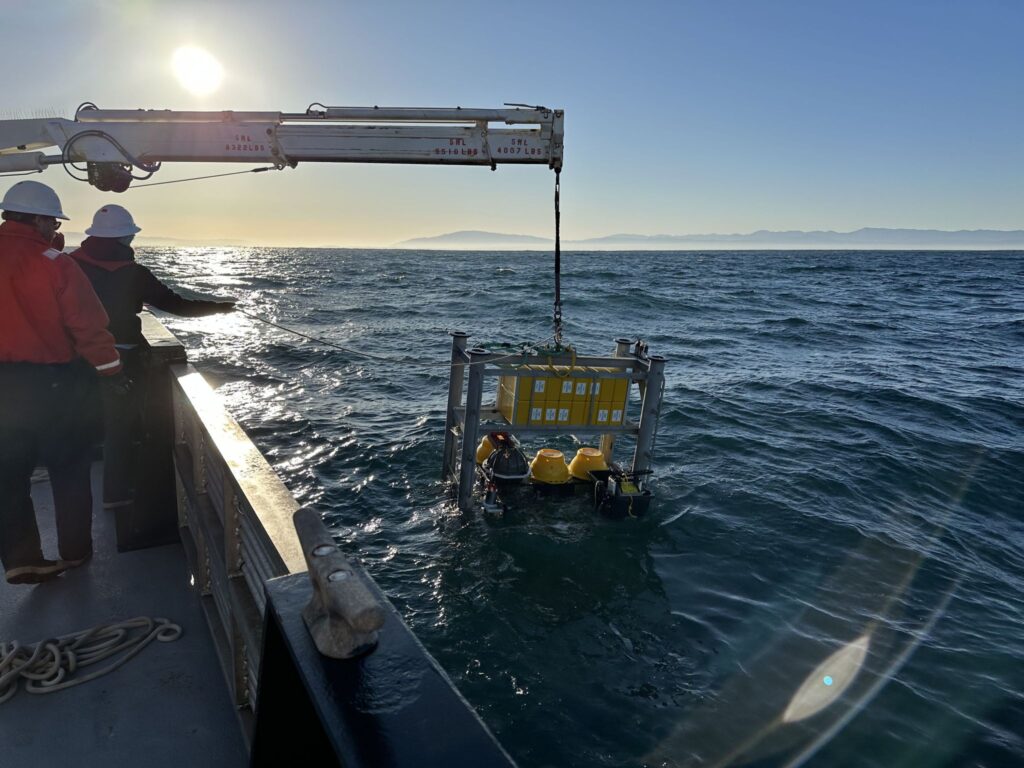
On January 28, 2025, a team of scientists, engineers, and marine operations crew from the Monterey Bay Aquarium Research Institute (MBARI) successfully deployed the Geo-Sense instrument on the southern flank of Monterey Canyon, offshore Central California. Developed through the partnership of Sintela and MBARI, the system includes:
- A low-power DAS interrogator, powered by a 30 kWh lithium battery
- Marine-grade connectors
- A 1 km armored fiber optic sensing cable
On the 3rd February 2026 MBARI’s Geo-Sense – a portable, marinised Distributed Acoustic Sensing (DAS) system – is once again on the seafloor in Monterey Canyon.
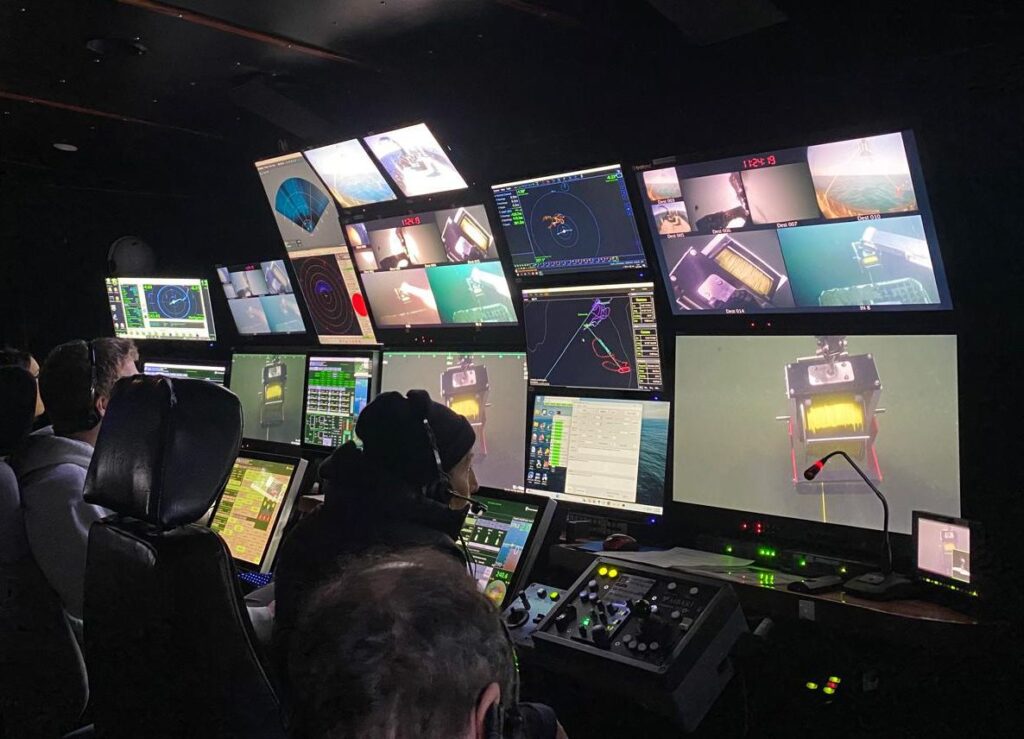
With the support of the R/V Rachel Carson crew, the ROV Ventana pilots, and the engineering team, the system – including a Sintela ONYX™ Nano interrogator and 1 km of fiber optic cable – has been successfully installed on a terrace along the southern flank of the canyon for its second deployment.
This campaign has two primary objectives:
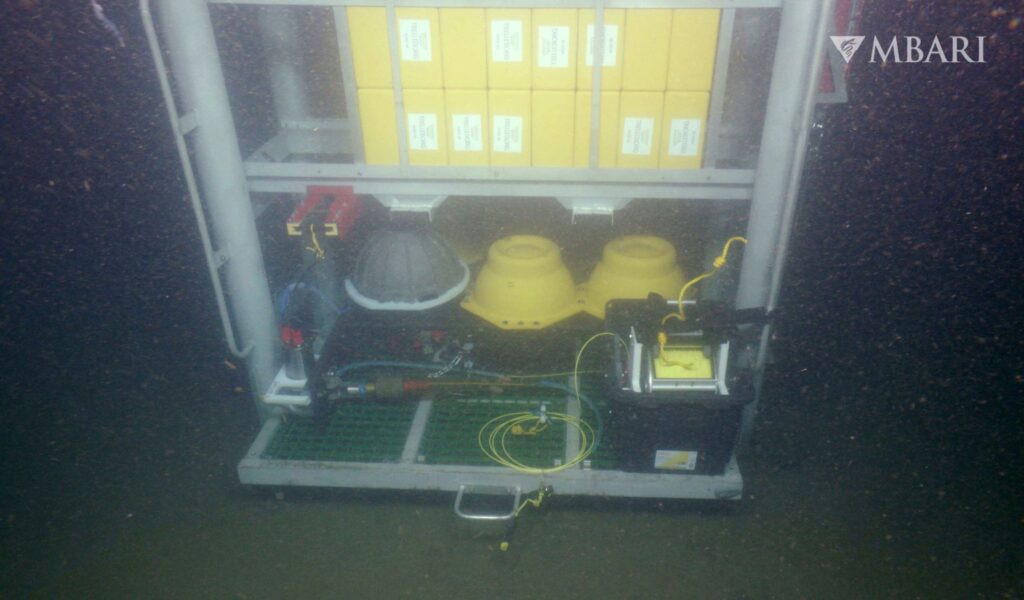
(1) Test a new deployment strategy by placing the instrument and battery spheres on an elevator, and deploying the fiber optic cable from a spool using the ROV.
(2) Measure sedimentary flows within Monterey Canyon using DAS technology.
The plan is to recover the instrument and cable in approximately two weeks, after which we will continue refining the deployment methodology in preparation for future operations offshore Greece later this year.
Sintela’s ONYX™ nano-S : The Core of Geo-Sense
At the heart of Geo-Sense is Sintela’s ONYX™ nano-S, a compact, high-performance DAS interrogator optimised for marine environments. It delivers the sensitivity and power efficiency required for remote, long-duration deployments.
To withstand deep-sea conditions, the ONYX™ nano-S was enclosed within a MBARI designed 17in Ti pressure sphere for robust protection.
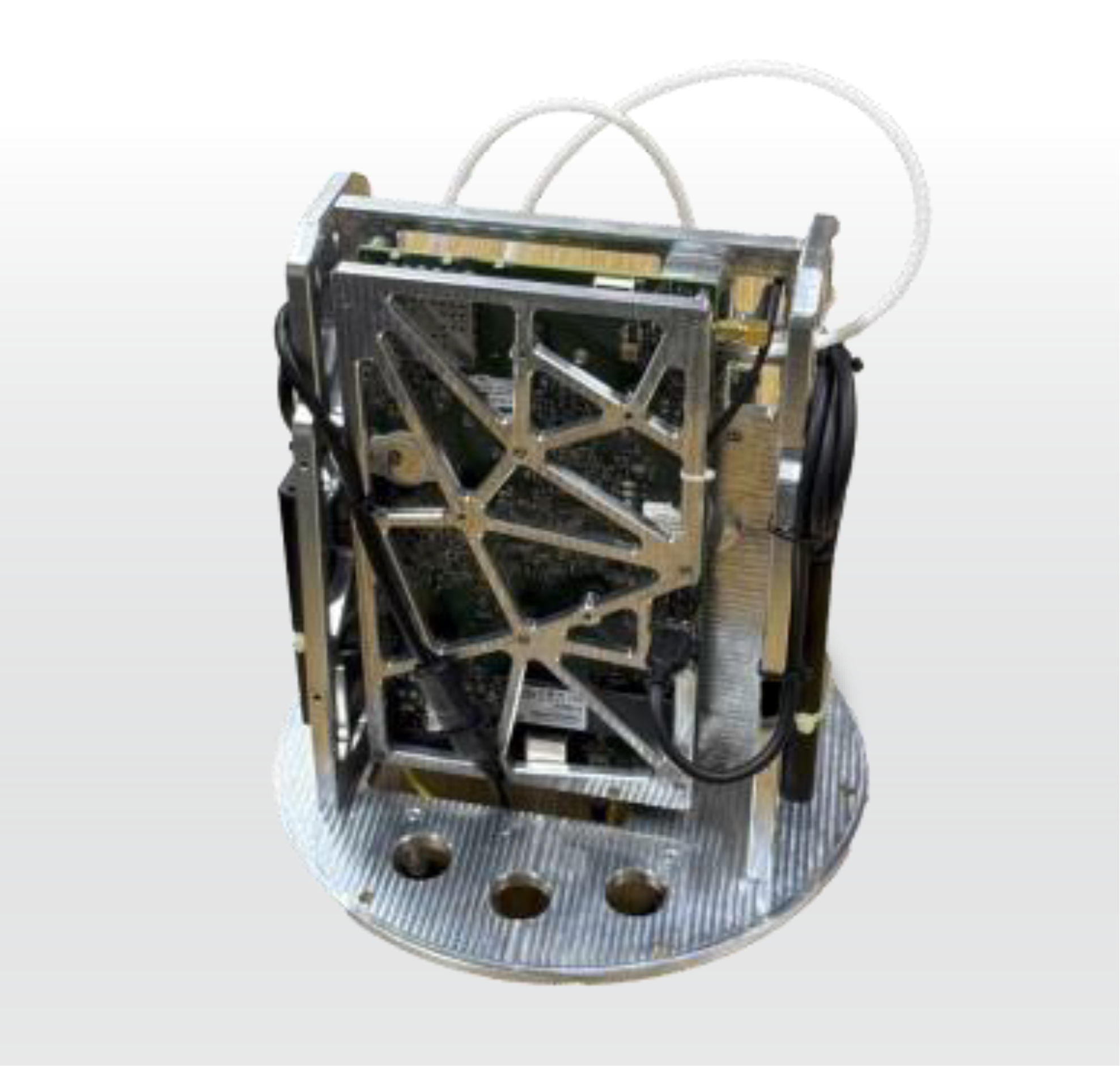
ONYX™ nano-S configured for marinization.
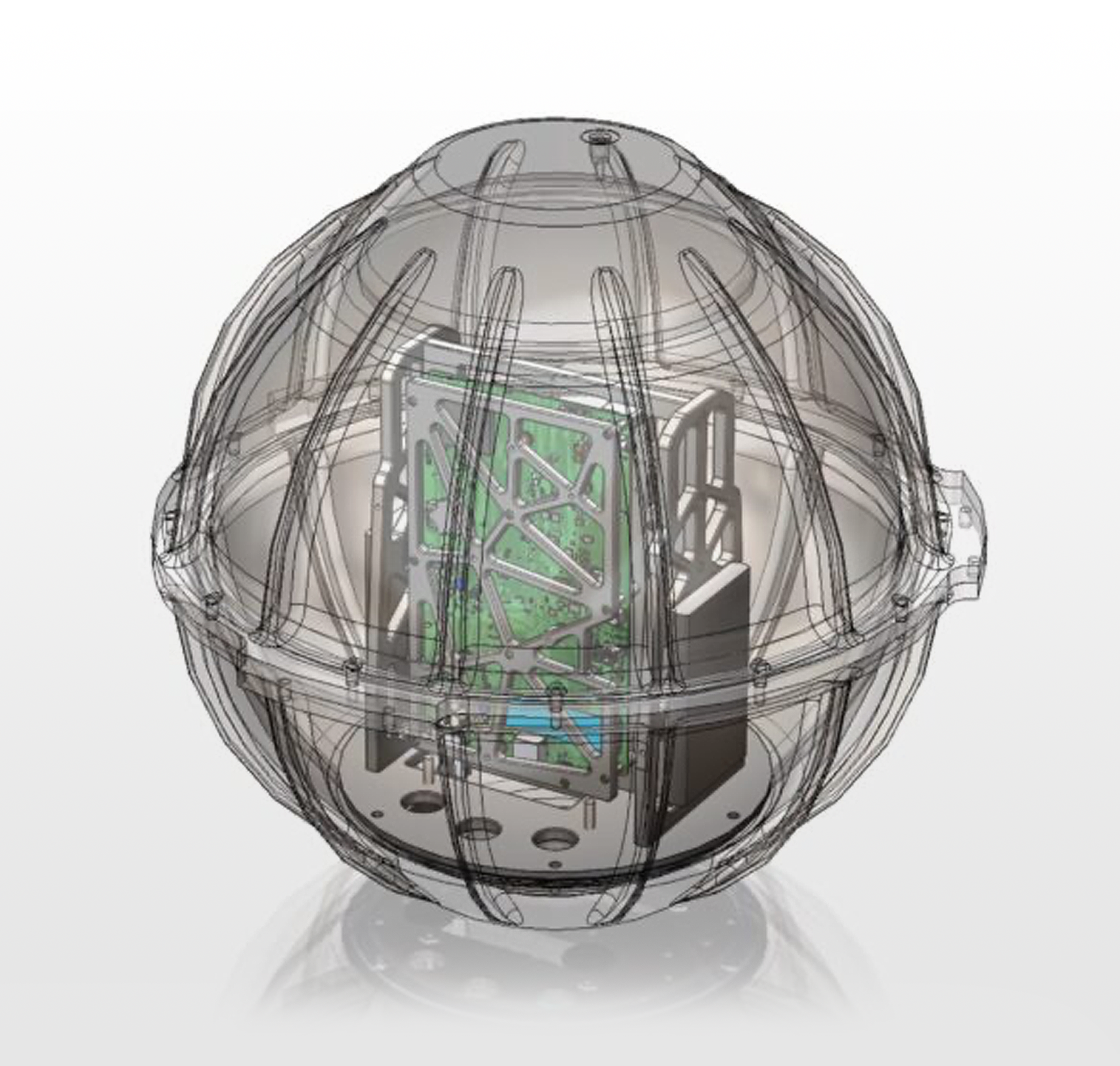
ONYX™ nano-S mounted inside a 17in Ti Pressure Sphere.
Real World Validation
Following deployment, Geo-Sense successfully retrieved data, confirming its ability to capture dynamic seafloor processes. This marks the first field validation of the system in a marine environment.
The 1km fiber-optic sensing cable played a crucial role in extending monitoring capabilities across the seafloor.
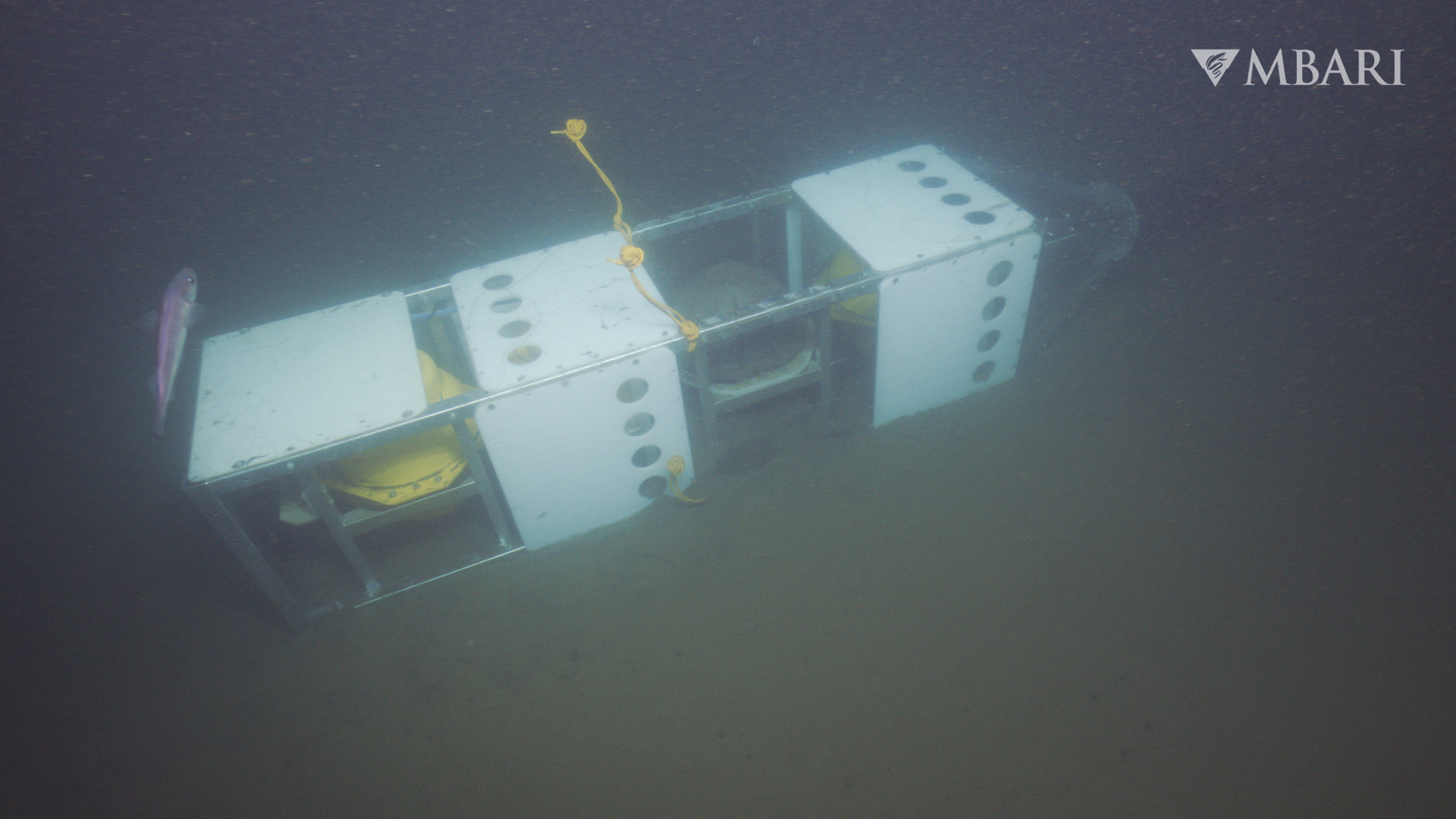
Geo-Sense system deployed on the seabed
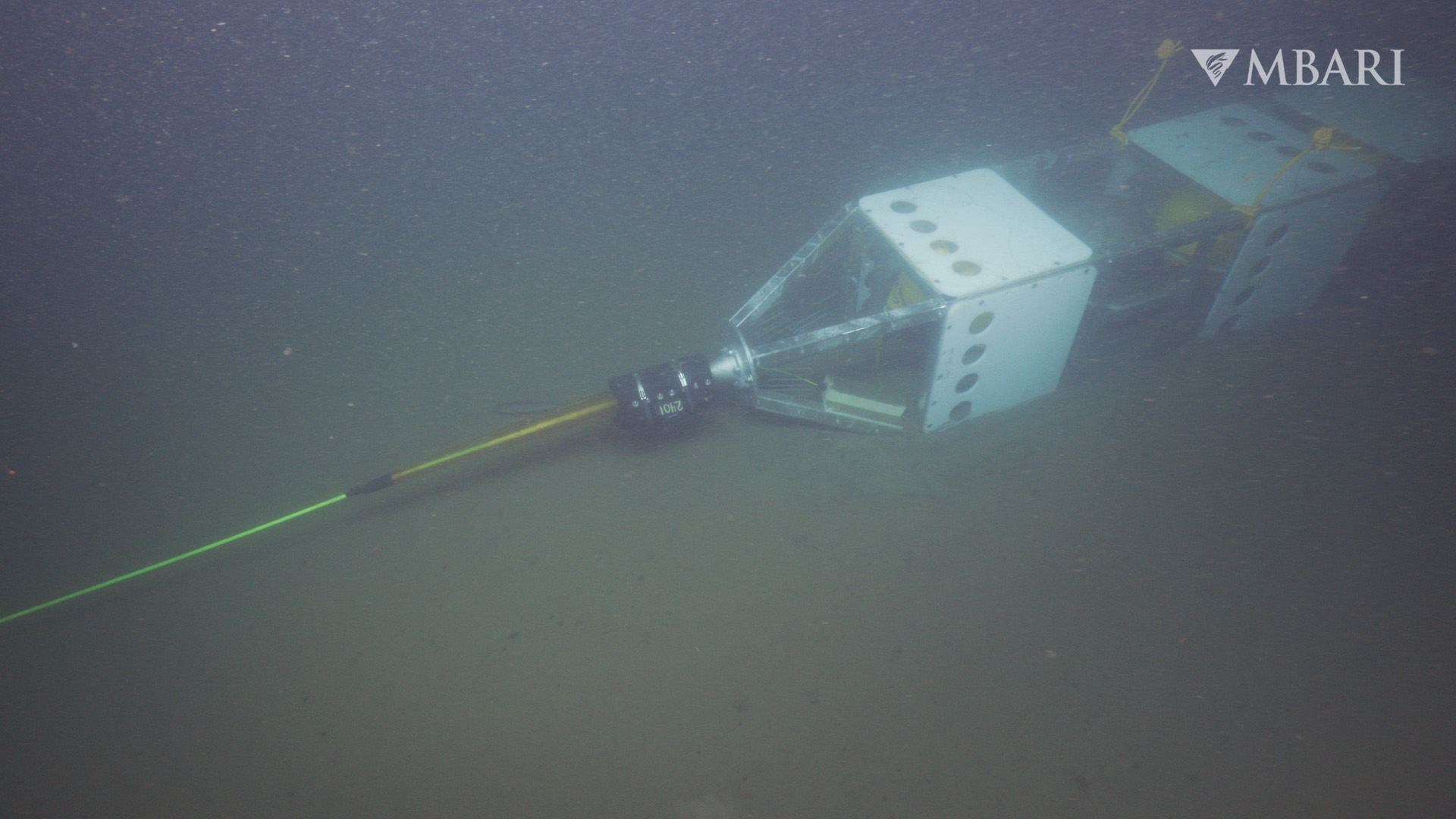
Fiber-optic sensing cable used by Geo-Sense
© 2025 MBARI
Expanding Ocean Science Applications
The success of Geo-Sense marks a major advancement in fiber-optic sensing for ocean science, opening opportunities for:
- Seafloor hazard detection – Early warning of seismic events and landslides
- Coastal resilience monitoring – Assessing shoreline changes and climate impact
- Deep-sea exploration – Cost-effective, scalable monitoring of remote environments
As DAS technology evolves, Geo-Sense and other Ocean Bottom Array (OBA) solutions will showcase how research-industry collaborations drive innovation. By harnessing fiber-optic sensing technology, MBARI and Sintela are advancing marine geophysical monitoring.
Project Details
DATE
2025/26
CLIENT
MBARI
PROJECT TYPE
Scientific Research
CONTRACTOR
Sintela